Internal Linking: Find and Create Opportunities
TL;DR: Internal links help Google and AI systems understand your expertise, and guide readers to solutions. Create three types: resource-to-resource, resource-to-commercial, and strategic FAQ links o…

In this article we will look into the following:
- Why Internal Linking Matters
- Internal Links You Should Actively Create
- How to Find Linking Opportunities
- Best Practices
- Recommendations
- Key Takeaway
––––––––––––––––––––
1. Why Internal Linking Matters
Internal links connect pages on your site to each other. They do three things:
- Help Google understand your expertise: When you link related content together, Google sees that you have comprehensive coverage on a topic. This helps your content rank better.
- Help AI systems find and cite your content: ChatGPT, Perplexity, and Google's AI Overviews look at how your pages connect to each other. Well-organized, clearly linked content is more likely to be used as a source.
- Keep visitors engaged: Internal links guide readers to related content they actually need, which keeps them on your site longer and moves them closer to conversion.
––––––––––––––––––––
2. Internal Links You Should Actively Create
- Resource → Resource linking
Link from one blog post or guide to another related resource on the same topic.
Example: A blog post on "Setting Up Payroll Tax Withholding" links to another post on "Common Payroll Mistakes."
Why it matters: This shows Google and AI systems that you have multiple pieces of content on the same topic, building topical authority.
- Resource → Commercial linking
Link from resource pages (blogs, guides, whitepapers, etc.) to your commercial pages (solutions, domain pages, target group pages, case studies).
Example: A guide on "Outsourcing vs. In-House Payroll" links to your Payroll Outsourcing solution page.
Why it matters: This passes authority to commercial pages and helps them rank better. It also guides readers toward solutions and helps AI systems understand the connection between your expertise and your products.
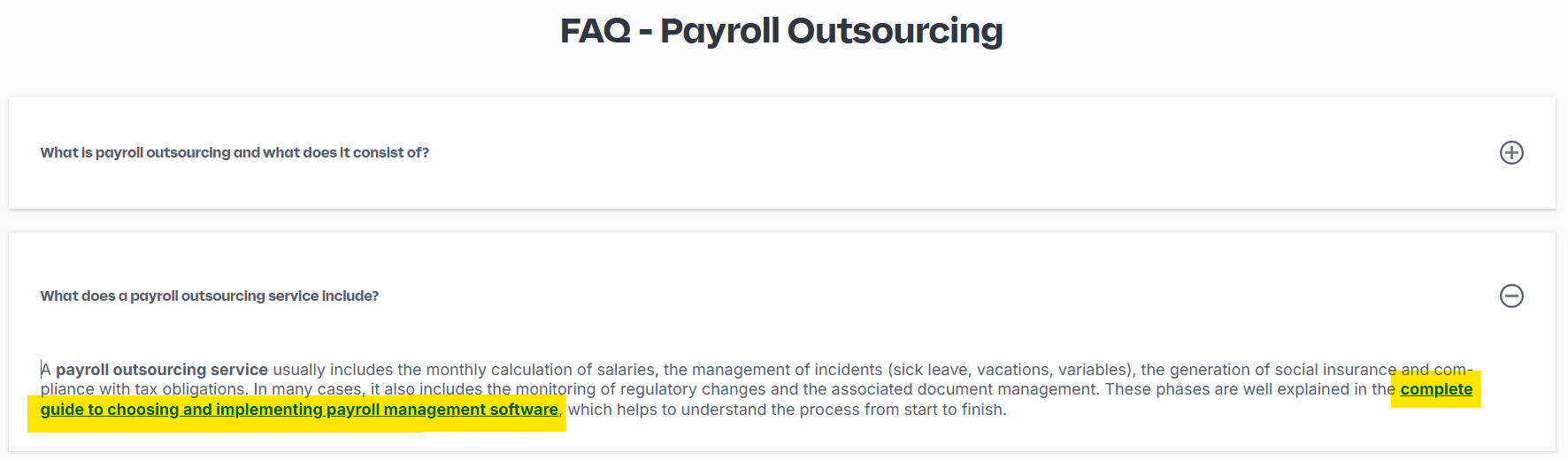
- Strategic FAQ linking (from commercial pages)
In your solution pages and commercial content, answer FAQ questions briefly – then link to relevant destinations that provide more depth. This could be a detailed blog post, a related solution page, a target group page, or a case study.
Example: Your Payroll Solution page has an FAQ: "How do I set up tax withholding?" Answer it in 2-3 sentences, then link to the detailed blog post on that topic. Or link to a another related commercial page.
Why it matters: FAQs are high-authority sections on commercial pages. Links from FAQs pass authority and help both users and AI systems understand connections between your solutions and educational content.
––––––––––––––––––––
3. How to Find Linking Opportunities
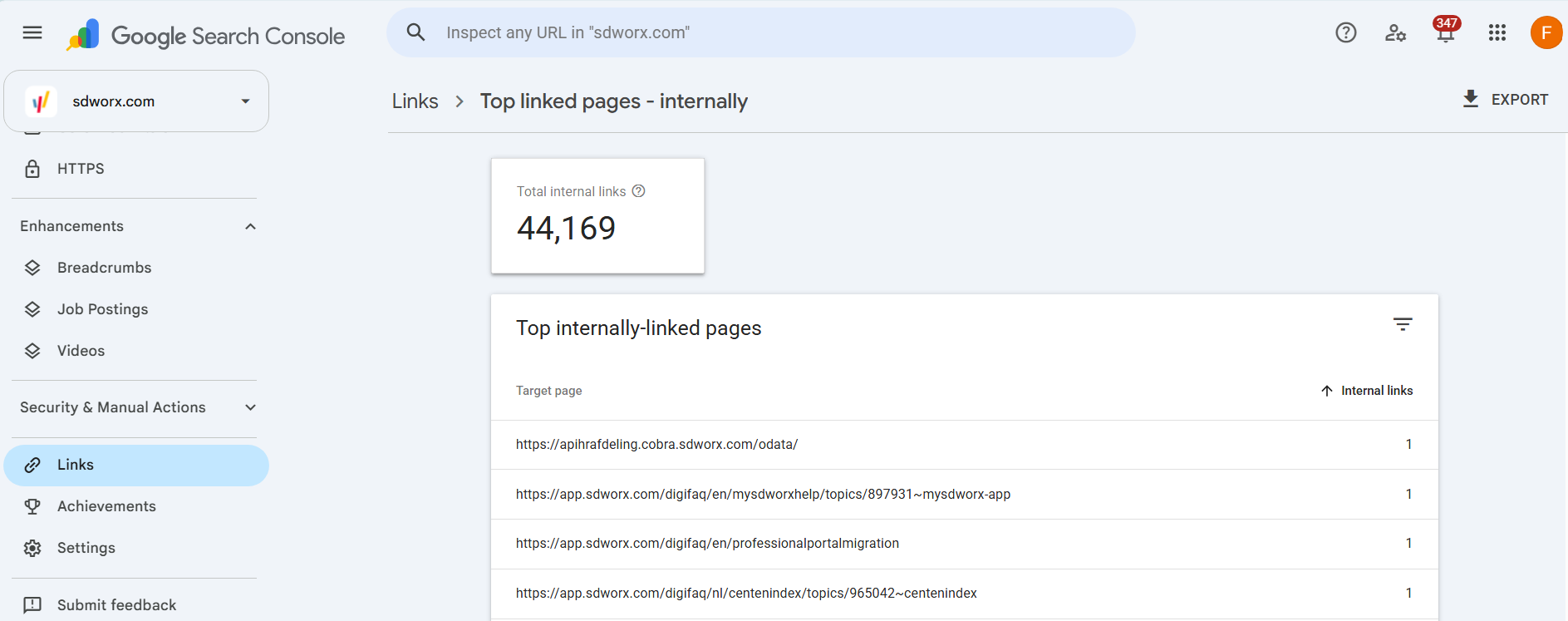
See which pages need more links:
- Open Google Search Console
- Go to Links (left menu, bottom)
- Click More under Internal Links
- Sort by fewest internal links
Apply link count guidelines by page type:
- Commercial pages (Solution, domain, target group, case pages): Should have 5-10+ incoming links
- Resource pages (blogs, ebooks, guides, podcasts, tools, whitepapers, 1.000-2.000 words): Should have 3-6 links
- Short resource posts (under 1.000 words) or press releases: 1-3 links is fine
- Very short pages (under 500 words): 1-2 links is fine
Find related content to link:
Use Google's site search to find all your pages on a topic, using this format:
Example: site:sdworx.com "payroll compliance" – shows all your pages Google knows about that mention this topic. This reveals:
- Resource pages that should link to each other
- Which resources could link to your Solution page
- Which resource pages could answer FAQs on your commercial pages
––––––––––––––––––––
4. Best Practices
- Link once to each destination
If you're linking to the same page from within one article, do it only once. Linking multiple times to the same destination doesn't add SEO value.
- Use clear anchor text
Don't link with generic anchors like "click here." Say what the reader and crawler will find with descriptive links:
❌ "More information", "Click here", etc.
✅ "Learn how to set up payroll compliance workflows" or (for short CTAs) "Payroll solutions", "Explore HR software" etc.
This helps both people and search systems understand where the link goes.
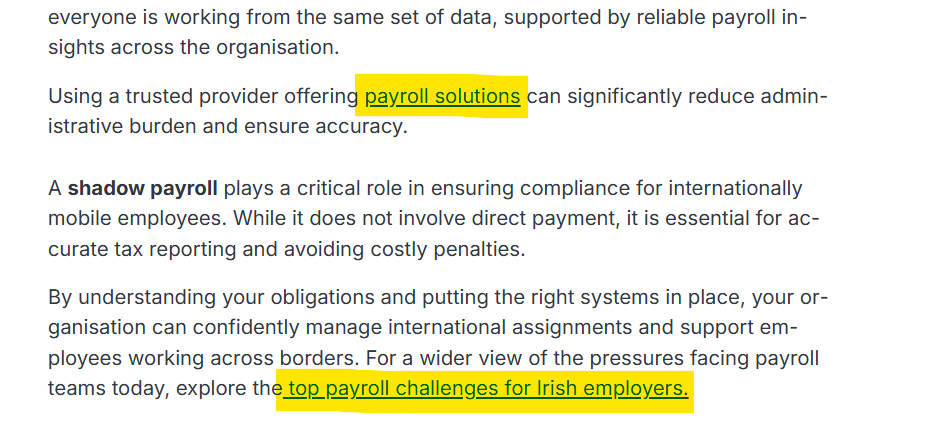
- Link naturally in the body text
Add links where they make sense in the reading flow – not forced. Aim for 2-5 contextual links per 1.000 words.
––––––––––––––––––––
5. Recommendations
- When writing or updating resource pages:
Look for opportunities to link to related resources on the same topic (use site search to find what you've already published on the same topic). Where relevant, also link to a solution page that solves the problem discussed in the resource. For example, a blog on payroll processing best practices could link to your Payroll Software solution page.
- When reviewing commercial pages (solutions, domain, target group pages):
Check if FAQs answer questions in 2-3 sentences, then link to a detailed resource page that goes deeper. You can also link to related solution pages, target group pages or case studies that illustrate the answer. This builds bridges between your commercial content and both educational and complementary solutions.
- Regular checks:
- Are resource pages linking to each other where relevant?
- Are commercial pages linking to the best resource pages?
- Are there any resource pages with zero internal links? Fix those.
––––––––––––––––––––
6. Key Takeaway
Internal linking tells Google and AI systems that you know your topics deeply. By connecting your resource pages to each other and to your commercial pages, you build topical authority and guide people closer to the right solution.
––––––––––––––––––––
Quick Links:
How did we do?
AI for SEO : How to create AI prompts
Internal Linking - Best Practices